Establish, Collaborate and Grow in India
Rajasthan International Education City is envisioned as a specialised platform for respected Indian and international universities seeking a structured presence in India. RIEC aims to combine campus infrastructure, academic collaboration, research, student services, industry engagement and long term expansion within one integrated education ecosystem.
Vistah Infra’s role is to support opportunity assessment, location planning, stakeholder coordination, infrastructure development and partnership facilitation. Academic approvals, degree awarding authority, admissions, curriculum, faculty appointments and regulatory compliance remain the responsibility of the relevant university and competent authorities.
Why India?
India offers a large and diverse student market, expanding demand for quality higher education and growing interest in globally relevant programmes. The National Education Policy 2020 supports internationalisation through academic and research collaboration, credit recognition and transfer, international student mobility and the establishment of campuses by eligible foreign institutions.
- Access to a large and growing student population
- Demand for internationally relevant qualifications and applied learning
- Opportunity to deliver global education closer to Indian students
- Scope for research partnerships addressing Indian and regional priorities
- Strong potential for executive education, professional programmes and lifelong learning
- Opportunities to build industry linked curricula, internships and employment pathways
- A platform to recruit domestic and international students over the long term
Why Rajasthan?
Rajasthan offers the potential to create a distinctive education destination supported by available development capacity, improving connectivity, an established higher education base, growing cities, a large regional student catchment and a strong cultural identity. The final website should use only verified and internally approved statistics relating to student population, connectivity, incentives, land or state support.
- Potential access to students from Rajasthan and neighbouring states
- Opportunity to create a planned campus environment rather than a constrained urban facility
- Scope for residential education, research, sports and community infrastructure
- Potential alignment with state priorities in education, skills, employment, innovation and investment
- A culturally distinctive location capable of supporting an international education destination

Why RIEC?
RIEC is intended to reduce the complexity of entering a new market by providing a coordinated project environment. Each institution can retain its academic identity and decision making while exploring shared infrastructure, services and partnerships where commercially and legally appropriate.
- Dedicated education and research ecosystem
- Flexible campus and facility planning
- Shared access to selected student, faculty and community amenities
- Coordination with project, infrastructure and technical partners
- Support for local stakeholder and government engagement
- Potential connections with Indian institutions, research organisations and industry
- Phased entry options that can grow with demand
- Integrated student housing, faculty accommodation, sports, healthcare, hospitality and commercial services
Foreign University Campus Regulatory Pathway
The following website content should be presented as a high level orientation, not legal advice or a promise of approval.
- Eligibility review: confirm that the foreign institution meets the UGC eligibility criteria applicable at the time of application. Under the 2023 regulations, this generally includes a top 500 overall or subject ranking, or outstanding expertise recognised by the UGC.
- Institutional authorisation: obtain approval from the university’s governing body or board to establish a campus in India.
- Campus proposal: prepare information on location, infrastructure, proposed programmes, curricula, fees, faculty availability and financial resources.
- Quality undertaking: confirm that the India campus will provide education of quality comparable with the home campus and that awarded qualifications will have equivalent recognition and status in the home jurisdiction.
- UGC application: submit the prescribed online application, documents and processing fee.
- In principle approval: the UGC may issue a Letter of Intent following review by its Standing Committee.
- Campus development and readiness: establish the approved academic, physical, digital, faculty and student support arrangements within the permitted period.
- Final readiness review: notify the UGC of readiness and complete the required review before academic operations begin.
- Operational compliance: maintain required disclosures, quality, student protections and regulatory compliance throughout operation.
Academic Collaboration Pathway
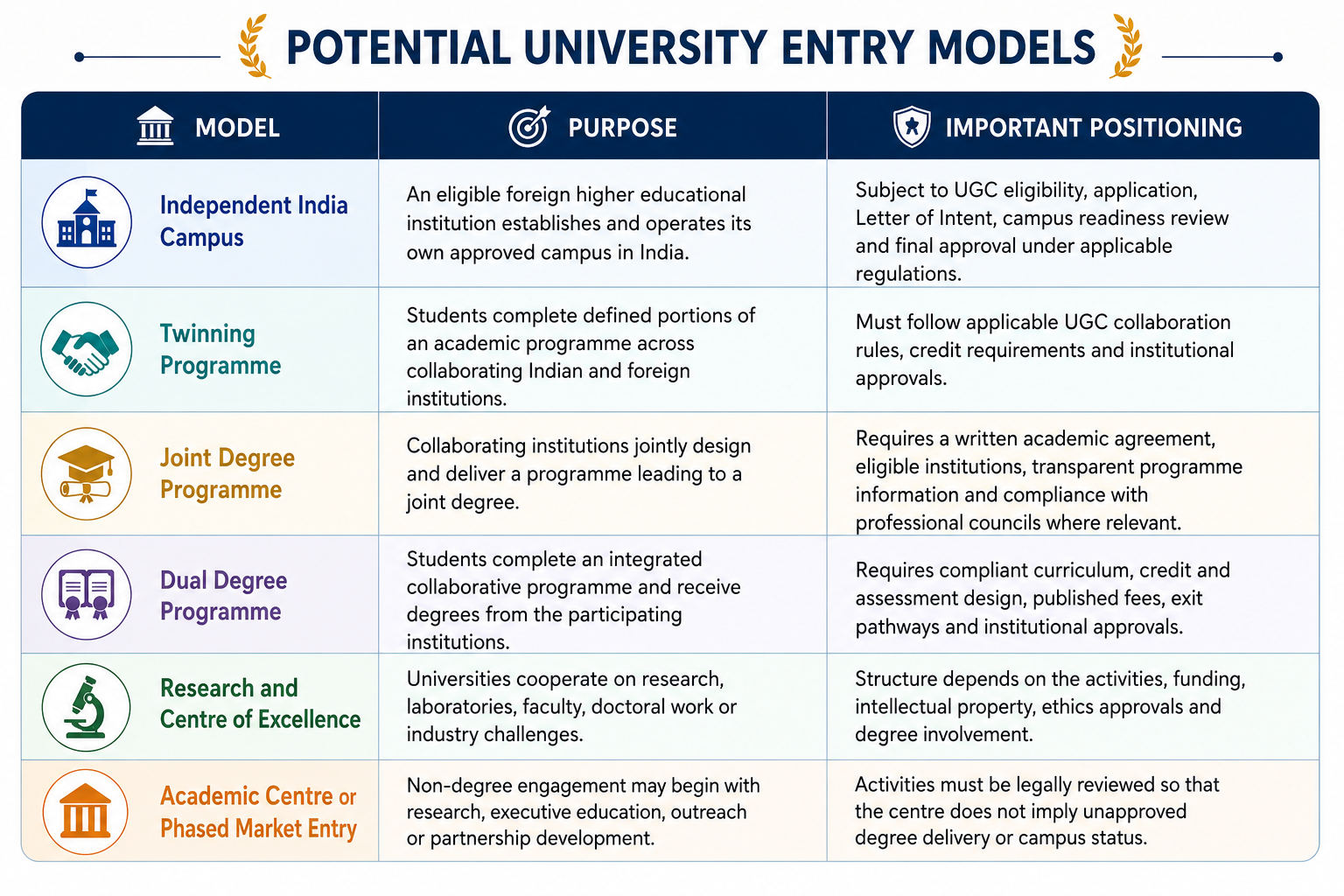
For twinning, joint degree and dual degree arrangements, participating institutions should confirm their eligibility under the UGC 2022 academic collaboration regulations and obtain all required internal and statutory approvals.
- Written memorandum of understanding or definitive academic agreement
- Approval from the appropriate university governing authority
- Approval from relevant professional statutory councils for regulated disciplines
- Defined curriculum, credits, teaching responsibilities and assessment framework
- Clear degree awarding and transcript arrangements
- Transparent total fees and student information
- Student mobility, visa, housing and support arrangements where applicable
- Credit recognition and non-overlapping curriculum controls
- Exit pathways and protection for students unable to complete a dual degree
- Public disclosure of programme details on the institutions’ websites before commencement
Academic Opportunities at RIEC
- Undergraduate and postgraduate programmes
- Doctoral and post-doctoral research
- Twinning, joint degree and dual degree programmes
- Executive education and professional development
- Centres of excellence
- Joint research laboratories
- Faculty and student exchange
- Industry sponsored research
- Innovation and entrepreneurship programmes
- Skill development and continuing education
- Summer schools and short academic programmes
- Conferences, seminars and policy forums
Priority Academic Themes
The final priority disciplines should be selected through market research, university capability mapping, industry demand and regulatory assessment. Potential themes include:
- Artificial intelligence, data science and cybersecurity
- Engineering, advanced manufacturing and clean technology
- Business, entrepreneurship, finance and public policy
- Healthcare, allied health, sports science and wellness
- Agriculture, water, sustainability and climate resilience
- Hospitality, tourism, design and cultural studies
- Teacher education and education technology
- Logistics, urban systems and infrastructure management
Campus and Infrastructure Support
Subject to project planning and definitive agreements, the RIEC platform may support universities with:
- Campus site and space planning
- Academic buildings, classrooms and laboratories
- Library and digital learning infrastructure
- Student housing and faculty accommodation
- Sports, recreation, healthcare and wellbeing facilities
- Conference, event and guest facilities
- Utilities, connectivity, security and campus services
- Sustainability and smart campus systems
- Construction and technical partner coordination
- Phased development and expansion planning
Student Experience and Success
The university proposition should extend beyond physical infrastructure. The website should show how RIEC intends to support a safe, inclusive and academically productive student experience.
- Orientation and transition support
- Academic advising and learning support
- Career services, internships and placement connections
- Entrepreneurship and incubation
- Mental health, wellbeing and accessibility support
- Student clubs, sports, arts and cultural activities
- Safe housing, transport, healthcare and security
- International student support where applicable
- Alumni engagement and lifelong learning
Research, Industry and Innovation
RIEC aims to connect academic capability with industry and societal requirements. Universities may explore centres of excellence, sponsored laboratories, applied research, startup programmes, technology transfer and professional education with suitable partners.
- Joint research agendas and shared facilities
- Industry sponsored chairs and laboratories
- Applied research addressing regional challenges
- Internships, apprenticeships and live industry projects
- Startup incubation and venture connections
- Intellectual property and technology transfer frameworks
- Faculty consulting and executive education
- Conferences, innovation challenges and demonstration programmes
What Vistah Infra Can Facilitate
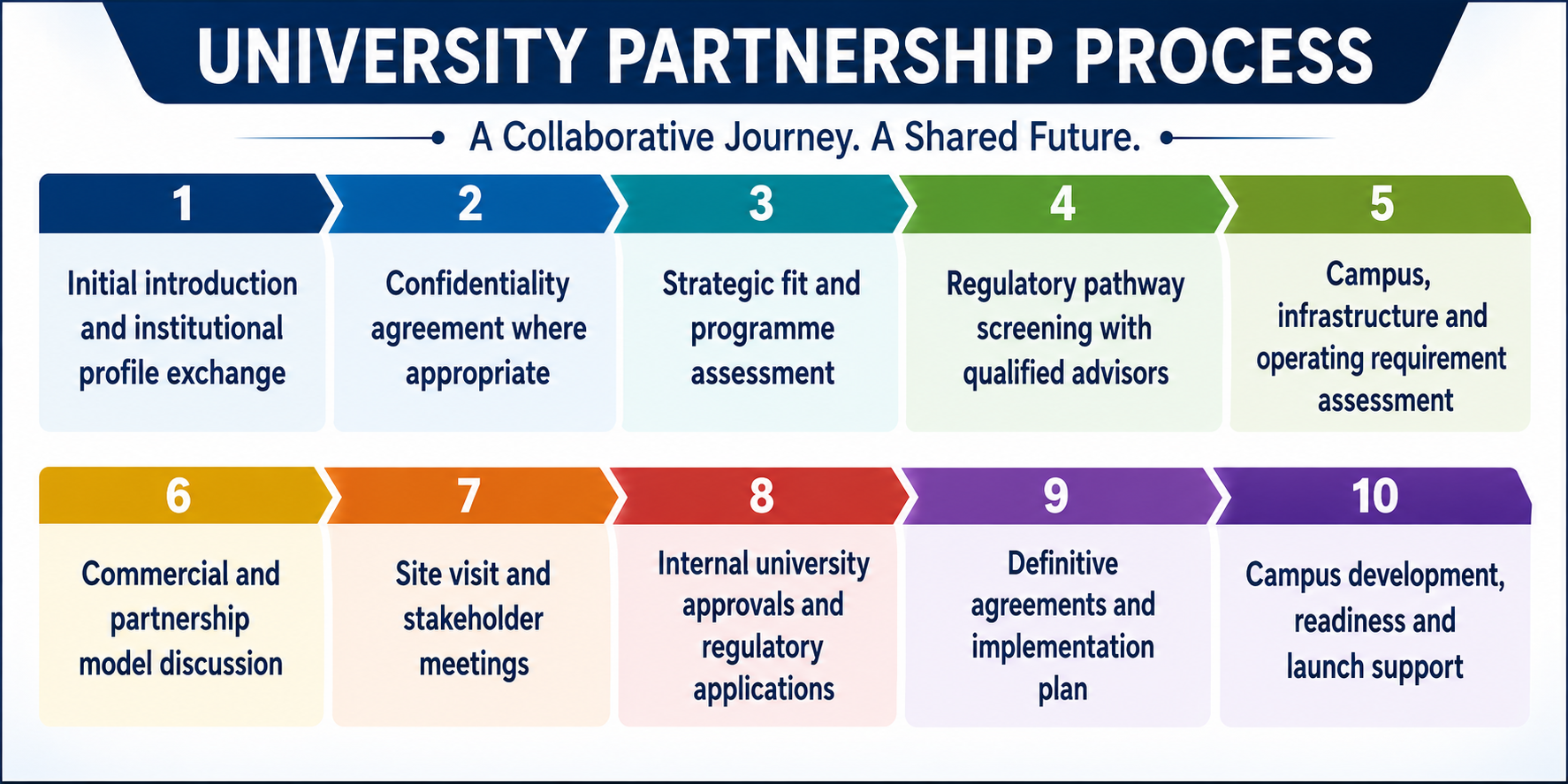
- Initial opportunity and fit assessment
- Confidential project briefing and site information
- Stakeholder and government engagement coordination
- Local ecosystem and potential partner introductions
- Campus requirement and development planning
- Infrastructure and technical partner coordination
- Commercial model discussion support
- Due diligence and project information coordination
- Phased implementation roadmap
- Ongoing project level relationship management